Rat or mouse activity does not automatically mean every inch of attic insulation must be replaced. The right scope depends on what can be seen in accessible areas: the amount and location of contamination, nesting, odors, moisture, physical damage, and whether the insulation can still perform its intended function.
An inspection should separate active rodent control from cleanup and insulation work. Trapping addresses rodents already inside. Rodent proofing or exclusion addresses identified accessible entry points. Cleanup or insulation removal addresses affected material that remains.
Signs Attic Insulation May Need Attention
Visible conditions that may justify a closer evaluation include:
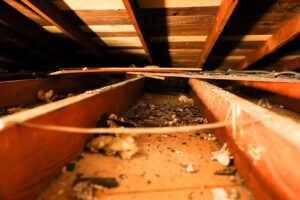
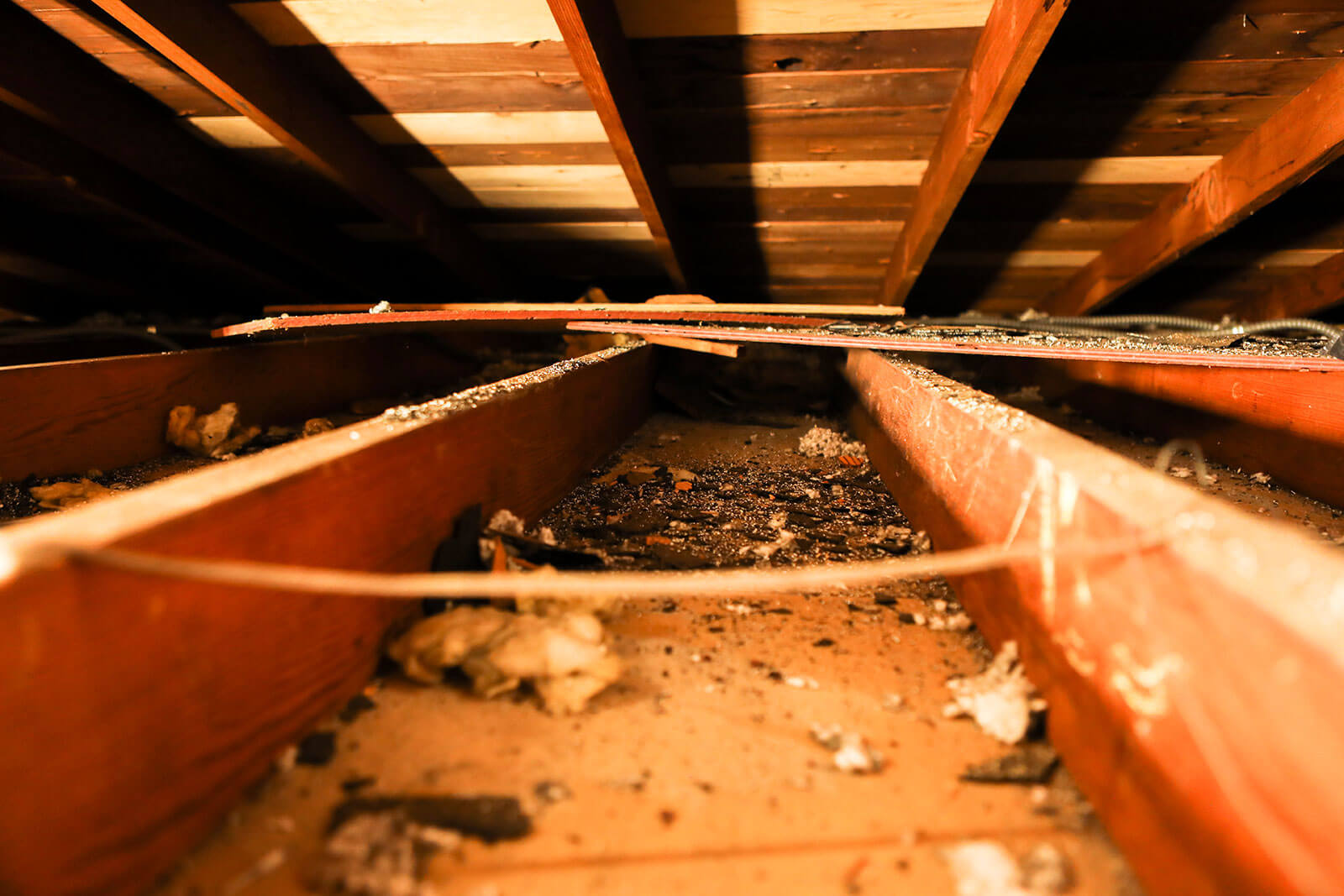
- Droppings, nesting material, or urine staining within the insulation
- Persistent odors associated with documented rodent activity
- Insulation that is heavily compressed, shredded, displaced, or missing
- Repeated travel paths or burrows through loose-fill or batt insulation
- Dead rodents or nesting material in an accessible insulated area
- Moisture, mold-like growth, or another condition that requires evaluation by the appropriate qualified professional
- Damaged ducts, wiring, vents, or stored materials near the affected area
One dropping or one scratching sound does not establish the condition of an entire attic. Evidence should be evaluated together and documented before the homeowner approves a scope of work.
When Insulation Removal May Be Appropriate
Partial or broader insulation removal may be recommended when accessible material is visibly contaminated, physically damaged, holding persistent odor, or preventing proper cleanup of the surface below it. Removal can also make sense when the insulation has been displaced or compressed enough that it no longer provides even coverage.
The scope should match the observed condition. A limited affected area may call for targeted removal, while widespread documented contamination may require a larger project. No article can determine that scope without inspecting the home.
When Full Replacement May Not Be Necessary
Not every attic with signs of rats or mice needs complete insulation replacement. If activity is limited, the insulation remains in serviceable condition, and affected material can be addressed within an approved cleanup scope, a smaller project may be appropriate.
Homeowners should be cautious of a recommendation made before accessible areas are inspected. Ask which material is affected, what evidence supports removal, what will remain, and whether new insulation is included in the written proposal.
Health Concerns and Safer Cleanup
Droppings, urine, dead rodents, and nesting material should not be swept or vacuumed while dry. The CDC recommends wet cleanup with disinfectant to reduce the chance of contaminated dust becoming airborne. Follow current public-health guidance and the disinfectant label.
Hantavirus is often mentioned in attic-cleanup articles, but species matter. The California Department of Public Health identifies deer mice as the primary reservoir associated with hantavirus in California. This does not mean every house mouse, roof rat, or Norway rat carries hantavirus. For symptoms or a specific exposure concern, contact a medical professional or local public-health department.
For a broader explanation of the risks, see Are Mice or Rats in the Attic Dangerous?
Odors, Air Quality, and Moisture
An attic odor can have more than one cause. Rodent waste, nesting material, a dead animal, moisture, mold, ducts, plumbing, or another building condition may contribute. It is not accurate to assume that every odor requires full insulation replacement or that replacing insulation will resolve every odor.
Rodent Control Inc. can document visible rodent-related conditions within accessible areas and explain the approved cleanup scope. Mold assessment, medical conclusions, and repairs outside the written rodent-control scope should be handled by the appropriate qualified professional.
Rodent Damage Beyond Insulation
Rats and mice may gnaw or disturb wiring, ducts, vent screens, stored items, and building materials. If wiring appears damaged, use a qualified electrician. Duct, roofing, structural, or moisture issues may require a separate contractor.
These items should be documented separately so the homeowner understands what is included in the rodent-control proposal and what falls outside it.
The Right Order of Work
A practical attic project usually follows this sequence:
- Inspect accessible areas. Document current evidence, likely travel paths, affected material, and accessible entry points.
- Address active rats or mice. Trapping may be recommended when rodents are currently inside.
- Approve the exclusion scope. Seal identified accessible openings included in the written proposal.
- Remove affected material when justified. The amount should be based on documented conditions.
- Clean accessible affected surfaces. Use a method appropriate for the material and contamination.
- Install new insulation only when included. Replacement should match the approved project and applicable building needs.
- Complete follow-up. Monitor according to the activity and terms documented for the property.
Replacing insulation before addressing active rodents and entry points may leave the underlying access problem unresolved.
What an Attic Cleanup Scope May Include
Depending on the inspection and approved proposal, work may include accessible debris removal, targeted or broader insulation removal, cleaning and sanitation, odor treatment, new batt insulation installation, or duct-related services. These are not automatic parts of every rodent-control job.
The written scope should explain the areas included, the services approved, limitations on access, and any warranty or follow-up terms. Warranty terms apply only when they are documented on the signed invoice.
Questions to Ask Before Approving Insulation Work
- What visible evidence supports removal or replacement?
- Is the recommendation targeted or for the full accessible attic?
- Will trapping and exclusion be addressed before or alongside cleanup?
- What material will be removed, cleaned, or left in place?
- Is new insulation included, and what type is specified?
- Which areas cannot be safely accessed or inspected?
- Are follow-up or warranty terms written in the signed invoice?
Free Inspection for Qualifying Single-Family Homes
Rodent Control Inc. specializes in rats and mice for qualifying standalone single-family homes. A free inspection covers accessible areas so we can document visible conditions, identify likely entry points, and explain which services—if any—are appropriate.
We provide the findings, recommended scope, and price before you decide whether to proceed. Learn more about attic cleaning after rodent damage, or request a free inspection. You can also call (833) 376-3368.