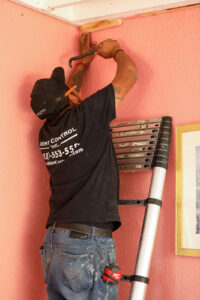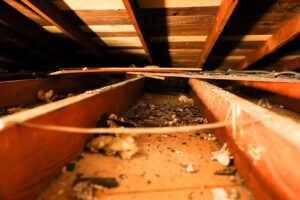
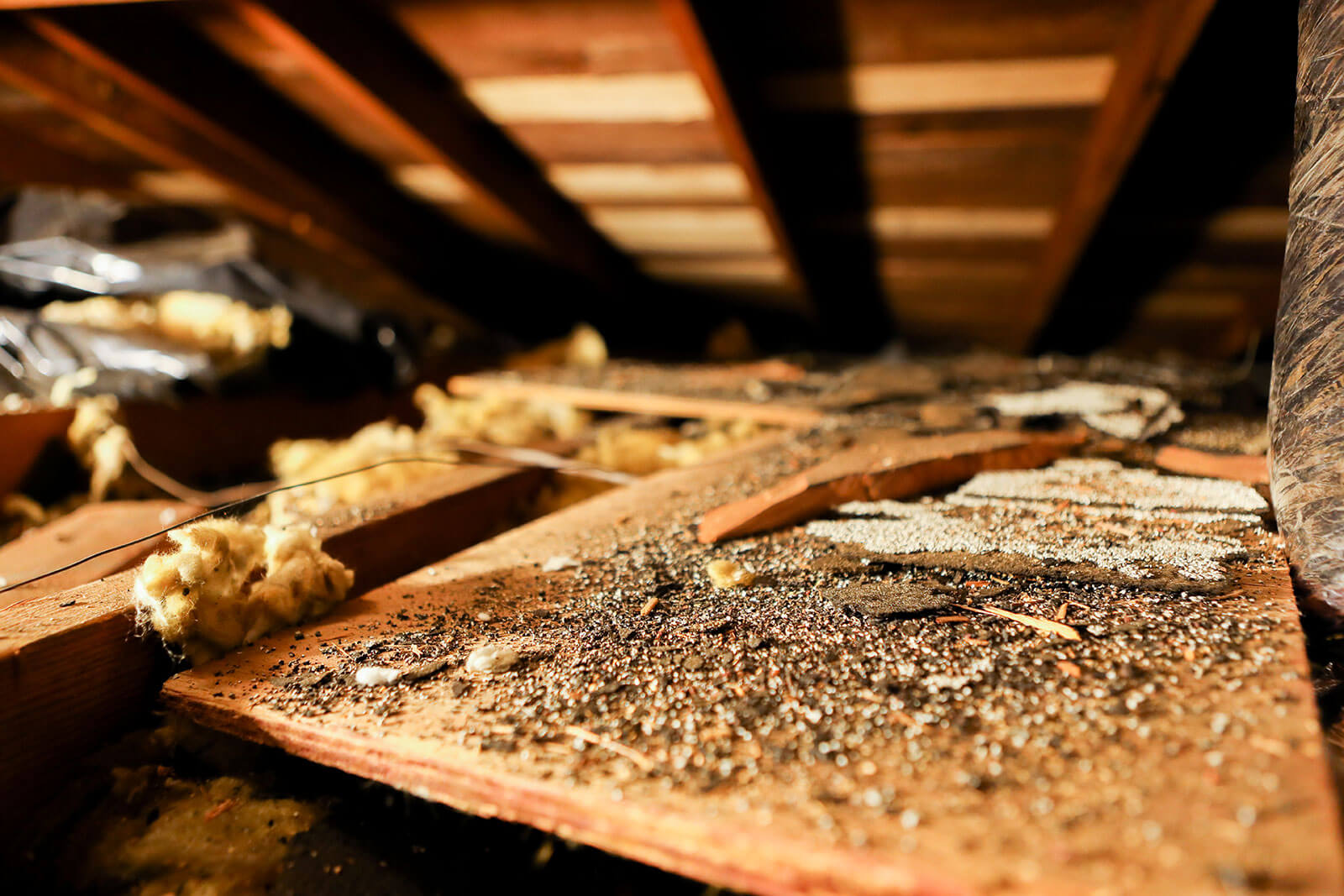
Attic cleaning after rodent damage is not ordinary housekeeping. Rat or mouse activity can leave droppings, nesting material, odors, damaged insulation, and gnawed materials behind. The right response starts with an inspection of accessible areas and a clear plan for trapping, rodent proofing, and cleanup—not cleanup alone.
Rodent Control Inc. serves single-family, standalone homes. Our free inspection covers accessible areas so we can document visible conditions and explain which services, if any, are appropriate for the home.
Signs of Rat or Mouse Damage in an Attic
Common signs include droppings, nesting material, scratching or movement noises, gnaw marks, disturbed or soiled insulation, and persistent odors. Roof rats often use elevated areas, but a sound or dropping by itself does not confirm the species or the full extent of activity. An inspection helps separate current evidence from old damage and identifies the accessible areas that need attention.
If you are unsure which rodent may be present, review our rat control and mice control service information.
What Should Happen Before Attic Cleaning?
Cleaning visible debris without addressing active rodents or entry points can leave the underlying problem unresolved. Before cleanup begins, the home should be evaluated in a practical order:
- Inspect accessible interior and exterior areas for visible evidence of rats or mice.
- Determine whether trapping is appropriate based on observed activity.
- Identify accessible entry points and prepare an approved rodent proofing scope.
- Evaluate contaminated or damaged materials that may need removal.
- Define the cleanup and sanitation work that is actually needed.
- Plan follow-up according to the activity documented at the property.
Each home is different. The approved work should be based on conditions found during the inspection, not a one-size-fits-all package.
A Safe Order of Work
A responsible project coordinates rodent control with attic cleanup. Trapping addresses animals already inside. Rodent proofing—also called exclusion—addresses identified accessible entry points within the approved scope. Cleanup then addresses accessible contamination and damage that remain.
This order matters because removing debris does not seal a gap, and sealing alone does not remove every damaged or contaminated material. The inspection should define how these parts fit together for the individual home.
What Attic Cleaning May Include
Depending on documented conditions and the approved scope, attic cleanup may include:
- Removing accessible nesting material and debris.
- Evaluating soiled or damaged insulation.
- Removing affected insulation when that work is approved.
- Cleaning and sanitation of accessible affected areas.
- Odor treatment when appropriate to the documented conditions.
Cleanup scope should be specific. It should not promise that every hidden void is accessible, that every odor has a single cause, or that future rodent activity can never occur. For related services, see our pages on home sanitation and insulation removal.
Why Rodent Proofing Matters
Rodents can return when accessible entry routes remain open. Rodent proofing focuses on sealing identified entry points included in the approved scope. That may involve gaps around rooflines, vents, utility penetrations, doors, or other accessible building openings found during the inspection.
The goal is to reduce access by correcting documented vulnerabilities—not to make an unlimited promise about every concealed area of a structure. Learn more about what to expect from rodent exclusion services.
Attic Conditions That May Need Separate Work
Rodent activity can expose problems beyond cleanup. Insulation may be compressed, soiled, or damaged. Ducts may need evaluation or replacement. Gnawed wiring or structural damage should be assessed by the appropriate qualified trade. These items should be documented separately so the homeowner understands what is included and what requires another specialist.
Rodent Control Inc. can explain the rodent-control, proofing, cleanup, insulation, and duct work included in its written scope. Electrical or structural repairs outside that scope should be handled by a properly qualified professional.
Homeowner Safety Around Rodent Debris
Avoid disturbing droppings, urine, or nesting material before reviewing current public-health guidance or speaking with a qualified professional. Do not use an attic article to diagnose illness or assume that every dropping carries the same risk. If anyone has health concerns after possible exposure, contact a healthcare professional.
For research-based information about rats, signs of activity, trapping, sanitation, and structural exclusion, consult the University of California Statewide Integrated Pest Management Program.
How to Choose an Attic Rodent Company
Ask the company to explain its California licensing, what the inspection can and cannot access, and how trapping, proofing, and cleanup are separated in the written scope. Any warranty or follow-up terms should match the signed invoice. Be cautious of promises that rodents will never return or that one service solves every possible condition.
Schedule a Free Inspection
If you have signs of rats or mice in the attic of a single-family, standalone home, Rodent Control Inc. can inspect accessible areas and explain the next steps. We serve qualifying homes in Los Angeles County, Orange County, and the Bay Area.
Contact Rodent Control Inc. to schedule a free inspection of accessible areas.