Yes—mice or rats in an attic can create health and property concerns. The level of risk depends on the species, the amount of activity, the condition of the attic, and whether droppings or nesting material are disturbed. Scratching sounds alone do not tell you the size of the problem, but they are a good reason to inspect accessible areas.
If you find droppings, urine, or nesting material, avoid sweeping or vacuuming it while dry. The CDC recommends wet cleanup with disinfectant to reduce exposure to contaminated dust.
Are Mice or Rats in the Attic Dangerous?
Rodents in an attic may contaminate accessible surfaces, damage insulation or ductwork, and gnaw on materials including wiring. The concern is not the same in every home. A few signs near one accessible entry point can require a different response than widespread droppings, damaged systems, or long-term nesting.
The practical response is to identify the animal, locate accessible entry points, address active rodents, and then clean affected areas when appropriate. No inspection can see every concealed void, so recommendations should be based on what can be safely accessed and documented.
Signs of Mice or Rats in the Attic
Common signs include:
- Scratching, scampering, or gnawing sounds, especially after dark
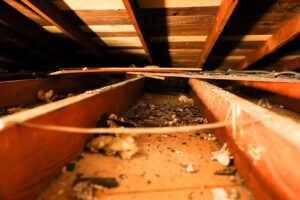
- Droppings, nesting material, or food debris
- Gnaw marks on wood, plastic, stored items, ducts, or wiring
- Rub marks or smudges along repeated travel paths
- Strong or unusual odors
- Disturbed, compressed, or contaminated insulation
- Damaged vent screens, roofline gaps, or openings around pipes and utility lines
Some of these signs can also come from other animals. Correct identification matters before repairs or cleanup begin.
Health Concerns and Safe Cleanup
Rodent urine, droppings, saliva, and nesting material should be handled carefully. Do not dry sweep or vacuum droppings. Ventilate the space when it can be done safely, wet contaminated material with an appropriate disinfectant, and follow the product label and current public-health guidance.
Hantavirus is often discussed in connection with rodents, but the species distinction matters. The California Department of Public Health identifies deer mice as the primary reservoir associated with hantavirus in California. That does not mean every house mouse, roof rat, or Norway rat carries hantavirus. If you have symptoms or a specific exposure concern, contact a medical professional or your local public-health department rather than relying on a pest-control page for a diagnosis.
For current cleanup steps, use the CDC guidance linked above. Large amounts of contamination, inaccessible spaces, or conditions involving dead rodents may justify professional cleanup.
How Rodents Can Damage an Attic
Mice and rats gnaw to maintain their teeth and may damage stored items, insulation, ducts, wood, plastic, and electrical wiring. Damage varies widely. If wiring appears chewed or exposed, have it assessed by a qualified electrician. If a duct or other building system is damaged, use the appropriate licensed contractor.
Not every attic with rodent activity needs full insulation removal. The scope should depend on the location, extent, accessibility, and condition of the affected material.
Mice vs. Rats in Attics
House mice can use openings around one-quarter inch wide. Roof rats are strong climbers and often reach elevated openings from trees, fences, utility lines, or roof features. Norway rats are more commonly associated with ground-level burrows and lower openings, although they can also enter buildings.
Dropping size, travel patterns, entry points, and visible damage can help distinguish mice from rats. A reliable inspection considers several signs rather than one clue alone. For more California-specific prevention information, see UC IPM’s guidance on rats.
Rodent Activity in Insulation
Insulation can provide cover and nesting material, and it may hold droppings, urine, or odors. Cleanup or insulation removal is not automatically necessary in every case. A recommendation should be based on visible conditions in accessible areas and the approved scope of work.
When removal is appropriate, active rodent activity and identified entry points should also be addressed. Replacing insulation without correcting the access problem may leave the home vulnerable to repeat activity.
What to Do If You Find Rodent Activity
- Avoid disturbing dry droppings. Do not sweep or vacuum them before reviewing current cleanup guidance.
- Inspect accessible areas. Look for activity, likely travel paths, damage, and entry points without entering unsafe spaces.
- Address active rodents. Trapping may be part of the plan when rodents are currently inside.
- Seal identified entry points. Exclusion or proofing helps reduce the chance of new rodents entering through accessible openings.
- Clean affected areas when appropriate. The method and scope should match the actual conditions.
- Repair damaged systems. Electrical, HVAC, roofing, or structural issues should be handled by the appropriate qualified professional.
Why Trapping Alone May Not Solve the Problem
Trapping can address rodents already inside, but it does not close the route they used to enter. If accessible entry points remain open, new rodents may enter later. That is why trapping and exclusion are often evaluated together.
Exclusion is not a promise that no rodent can ever return. It is a targeted process of identifying and sealing accessible openings included in the agreed scope, followed by monitoring when recommended.
Rodent Proofing and Exclusion
“Rodent proofing” and “rodent exclusion” are commonly used for the same basic service: finding and sealing accessible entry points with materials suited to the location. The work may include roofline gaps, vents, pipe penetrations, door gaps, or other documented openings.
Learn more about our rodent proofing services or our Los Angeles rodent exclusion process. Any warranty applies only when it is written in the signed invoice and is subject to those documented terms.
When Professional Help Makes Sense
Professional help may be useful when the attic is difficult to access, activity keeps returning, contamination appears widespread, building systems are damaged, or you are unsure whether the signs came from mice, rats, or another animal. Avoid entering areas that are unsafe because of heat, unstable surfaces, exposed wiring, or limited clearance.
A responsible inspection should explain what was observed in accessible areas, what could not be inspected, and which services—if any—are recommended.
Schedule a Free Inspection
Rodent Control Inc. specializes in rats and mice for qualifying standalone single-family homes. A free inspection covers accessible areas and is used to document visible signs, likely entry points, and the recommended scope. You receive the findings, recommendations, and price before deciding whether to proceed.
Depending on the conditions, recommendations may include rat control, mouse control, exclusion, sanitation, or insulation services. Call (833) 376-3368 or request a free inspection.