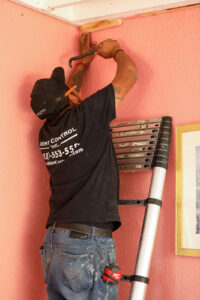
Attic insulation is not a rodent barrier. Rats and mice can nest in, tunnel through, compress, or contaminate many common insulation materials. The part of a rodent-control plan that helps keep them out is rodent exclusion: finding accessible entry points and sealing them with materials suited to the opening.
Insulation still matters after rodent activity. It may need to be cleaned around, selectively removed, or replaced when contamination or physical damage is extensive. But installing new insulation without correcting entry points can leave the same access problem in place.
Is There Truly “Rodent-Proof” Insulation?
No common attic insulation should be treated as mouse-proof or rat-proof. Search terms such as “rat-proof insulation” and “rodent-resistant insulation” can make the material sound like a substitute for exclusion, but rodents may chew or travel through many building materials when an opening remains accessible.
Insulation is designed primarily for thermal performance. It should not be relied on to close roof gaps, plumbing penetrations, damaged vents, eave openings, or other entry points. Those conditions require inspection and appropriate repairs.
What Actually Helps Keep Rats and Mice Out?
A durable plan separates three different jobs:
- Control current activity. Identify where rats or mice are active and use an appropriate trapping plan.
- Seal identified entry points. Repair accessible openings with materials appropriate to the location while preserving ventilation and drainage.
- Address contamination or damage. Determine whether cleanup, insulation removal, duct work, or new batt insulation is justified by the actual condition of the attic.
The University of California Integrated Pest Management program also emphasizes sanitation, exclusion, and population control rather than relying on a single material. See UC IPM’s guidance on rats.
Can Rats or Mice Damage Attic Insulation?
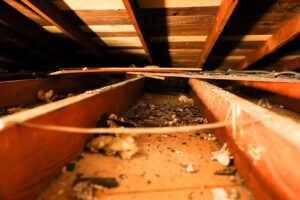
Yes. Rodents may compress or disturb insulation, create travel paths, use portions as nesting material, and leave droppings or urine in affected areas. The extent can vary widely. A few signs of activity do not automatically mean that all insulation must be removed.
During an inspection, the useful questions are:
- Is contamination isolated or widespread?
- Has the insulation been physically displaced or compressed?
- Are there odors or moisture conditions that require separate diagnosis?
- Can the affected area be accessed safely?
- Have the rodent entry points been identified and addressed first?
When Might Insulation Removal Be Appropriate?
Removal may be considered when accessible insulation has widespread droppings or urine contamination, significant nesting debris, persistent odor associated with contaminated material, or damage that prevents the insulation from performing as intended. The scope should follow the evidence found during inspection—not a blanket assumption that every rodent visit requires a full attic replacement.
For a detailed decision guide, read Signs Attic Insulation May Need Replacement After Rodents.
When Full Replacement May Not Be Necessary
If activity is limited, the insulation remains largely intact, and contamination is confined to a small accessible area, a narrower cleanup scope may be reasonable. The correct plan depends on accessibility, the type and extent of contamination, and whether damaged materials can be addressed without disturbing unaffected areas.
Rodent Control Inc. does not use a one-size-fits-all rule. A free inspection of accessible areas helps determine whether the home needs trapping, proofing, cleanup, insulation work, or a combination of services.
Safe Cleanup Matters
Do not sweep or vacuum dry rodent droppings. That can place contaminated particles into the air. The CDC advises ventilating the space when appropriate, wetting contaminated material with disinfectant, allowing contact time, and removing it with gloves. Review the CDC’s rodent cleanup instructions before handling droppings.
Large, inaccessible, or heavily contaminated attic areas can require a professional scope. Health concerns should be directed to a qualified medical professional or public-health agency.
Do Cellulose, Fiberglass, or Spray Foam Repel Rodents?
Product characteristics differ, but none should be presented as a guarantee that rats or mice cannot enter or return. Borate treatment may be relevant to certain insects and product performance, but it should not be turned into an unsupported promise of rodent prevention. Foam can fill gaps for energy or air-sealing purposes, yet rodents may still damage it and it is not automatically the right exclusion material for every opening.
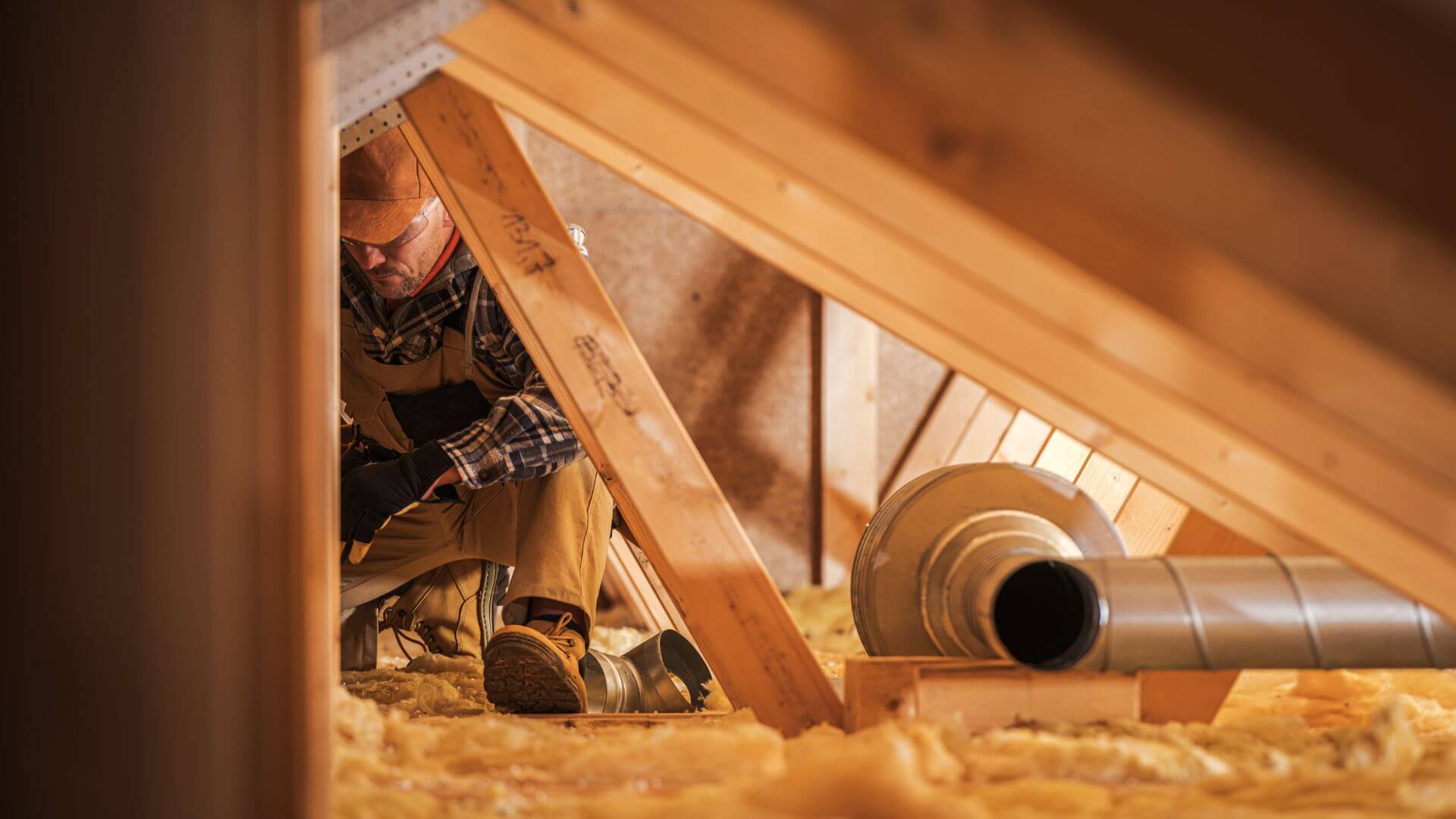
RCI’s insulation work is scoped separately from rodent proofing. When new insulation is appropriate, we install batt insulation as documented in the approved job scope. We do not promise that insulation itself will make a home rodent-free.
The Correct Order of Work
- Inspect accessible areas and identify signs of rat or mouse activity.
- Set a trapping plan when active rodents are present.
- Seal identified accessible entry points with suitable exclusion materials.
- Remove contaminated or damaged material when the inspection supports it.
- Complete cleaning, sanitizing, odor treatment, duct work, or batt-insulation installation only when included in the written scope.
- Perform the follow-up described in the signed agreement or invoice.
This order avoids covering up evidence or installing new insulation before the access problem has been addressed.
Questions to Ask Before Approving Attic Insulation Work
- Which specific areas are contaminated or damaged?
- Why is removal recommended, and is it full or selective?
- Which entry points were found and which are included in the proofing scope?
- What insulation product and coverage are included?
- What cleanup, duct, or odor-treatment work is included?
- What follow-up or warranty terms appear on the signed invoice?
Free Inspection for Qualifying Single-Family Homes
Rodent Control Inc. specializes only in rats and mice in qualifying standalone, single-family homes across Los Angeles County, Orange County, Long Beach, and the Bay Area. Our free inspection covers accessible areas and helps define whether the home needs trapping, rodent proofing, rodent-related cleanup, insulation removal, duct work, or new batt insulation.
Schedule a free inspection to receive a property-specific scope. Any warranty or follow-up terms are only those documented on the signed invoice.