Rodents are sneaky, resourceful, and surprisingly quiet—until their presence becomes impossible to ignore. By the time most homeowners realize they have an infestation, significant damage has often already been done. Understanding the early signs of rodent infestation is the key to protecting your property, health, and peace of mind. Whether you suspect rats in your house or think mice may be nesting in your attic, recognizing subtle indicators early can save you from costly repairs and potential health risks.
This guide describes overlooked rodent infestation signs, ways to identify rodent problems, and when a homeowner should request an inspection. Rodent Control Inc. provides chemical-free rat and mouse control for detached, single-family homes. Proofing helps reduce re-entry risk; no permanent result is promised.
Understanding the Hidden Behavior of Rodents
Before spotting signs, it’s important to understand how rodents behave. Mice and rats are nocturnal creatures, meaning they’re most active at night. They’re skilled climbers and can squeeze through holes as small as a dime (in the case of mice) or a quarter (for rats). Because of this, infestations often begin quietly in attics, crawl spaces, basements, or behind walls, where rodents build nests, reproduce rapidly, and move unseen.
Rodents are driven by food, water, and shelter. Once they find a way inside—through cracks, vents, or gaps in foundations—they rarely leave on their own. Recognizing early signs of rodent problems gives homeowners a critical window to stop the infestation before it grows.
Subtle but Serious: Common Signs of Rodent Infestation
1. Scratching Noises in Walls or Ceilings
One of the most common but overlooked signs of rodent activity is strange noises at night. If you hear scratching, scurrying, or gnawing sounds in walls, ceilings, or under floors, it could indicate rodents moving around or nesting. Mice tend to make lighter, faster noises, while rats often sound heavier and slower.
Homeowners often mistake these sounds for plumbing or settling noises, but if they occur consistently after dark, it’s time for a rodent control inspection.
2. Rodent Droppings Identification
Rodent droppings are one of the clearest indicators of infestation. Fresh droppings are dark, moist, and soft, while older ones appear gray and crumbly. Mouse droppings are small—around 1/8 inch long with pointed ends—while rat droppings are larger and more blunt.
You’ll often find droppings near food sources, along baseboards, or inside cabinets and pantries. Their location can reveal where rodents are most active. If you notice a sudden cluster of droppings in one area, the infestation is likely growing.
3. Gnaw Marks and Chewed Wires
Rodents’ teeth never stop growing, which means they constantly gnaw to keep them trimmed. Chewed wires, baseboards, furniture, and insulation are major warning signs. This behavior not only causes property damage but also increases the risk of electrical fires.
Chewed wiring warrants attention from a qualified electrician. Avoid touching damaged wires, and arrange an inspection if you suspect rat or mouse activity near electrical equipment.
4. Unpleasant Rodent Urine Smell
Another telltale sign of rodent infestation is a persistent musky odor. Rodent urine contains pheromones that communicate territorial information to other rodents. Over time, the smell becomes stronger and more unpleasant, particularly in confined areas like attics and crawl spaces.
If you smell something musty but can’t locate its source, you may have hidden rodent infestation nearby. The odor tends to intensify as the colony grows, especially in poorly ventilated areas.
5. Nesting Materials and Shredded Insulation
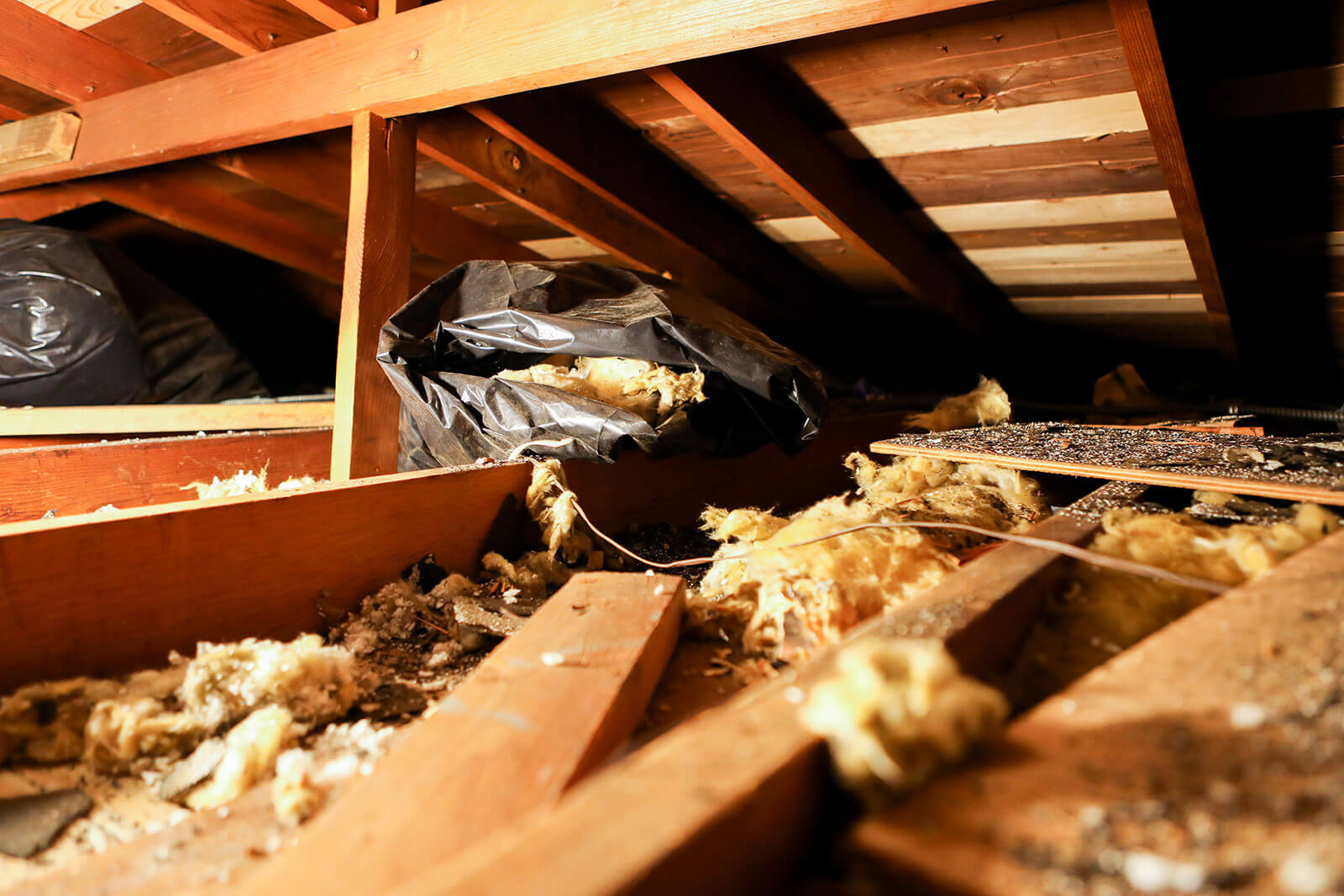
Rodents build nests using shredded paper, fabric, insulation, and plant matter. If you find these materials tucked away behind appliances, in storage boxes, or inside insulation, it’s a strong sign that rodents are nesting nearby.
In attic rodent infestation cases, homeowners often discover compact nests made from insulation material. In crawl spaces, nests may appear near vents or plumbing pipes. Finding these nests means the rodents have already been inside for some time.
6. Pet Behavior That Signals Rodents
Cats and dogs can sense and hear rodents long before humans do. If your pet suddenly becomes fixated on a particular wall, floor area, or appliance, it may be reacting to mice or rats hiding behind it.
Unexplained barking, scratching, or staring can all indicate rodent movement in walls or ceilings. Never ignore these instincts—animals often detect subtle vibrations or smells that point to rodent activity.
7. Tracks, Smudge Marks, and Grease Trails
Rodents follow consistent travel routes along walls and baseboards. Over time, the oil from their fur leaves dark smudge marks or grease trails. You might also spot tiny footprints or tail drag marks in dusty areas like garages, attics, or crawl spaces.
These rodent tracks and droppings are evidence of established pathways. Marking these areas helps pest control professionals identify active zones during a rodent control inspection.
8. Signs of Rats in the Attic or Crawl Space
Rats often seek warmth and safety in attics and crawl spaces. Attic rodent infestation signs include droppings in insulation, chewed beams, and urine stains on drywall. You may also hear scurrying or squeaking sounds during the night.
In crawl spaces, rats may dig burrows or nest near foundation vents. If left unchecked, they can chew through HVAC ducts, wiring, and even structural wood, creating long-term property damage.
9. Strange Noises and Odors Coming from the HVAC System
Sometimes, hidden rodent infestations occur inside HVAC systems or air ducts. Rodents may use ductwork as a travel route, spreading odor, bacteria, and allergens throughout the home. If your air vents emit a foul smell or strange scratching noises, it’s important to have your system inspected immediately.
Professionals often discover nesting materials or droppings inside air ducts—clear evidence of rodent presence that requires thorough cleaning and sealing.
10. What Attracts Rodents to Homes
Understanding what draws rodents inside can help prevent future infestations. Rodents are attracted by easy access to food, warmth, and shelter. Pet food left overnight, open garbage bins, unsealed dry goods, or cluttered storage areas are all major attractants.
Outdoor factors also play a role. Overgrown vegetation, leaking pipes, and gaps in roofing or vents provide entry points and hiding spots. Taking proactive rodent proofing measures such as sealing holes, trimming plants near your home, and cleaning regularly helps reduce risks dramatically.
11. How to Detect a Rodent Problem Before It Spreads
Early detection can make the difference between a small nuisance and a full-blown infestation. Keep an eye on subtle rodent infestation signs such as gnaw marks on food packaging, unexplained dirt or droppings near baseboards, and nighttime noises.
Homeowners can perform simple rodent inspection tips monthly—check behind appliances, look for chewed materials in storage areas, and ensure your attic insulation remains undisturbed. If you find any trace, it’s best to call experts for a professional assessment.
When to Call for Professional Rodent Control
Once you’ve identified multiple signs—droppings, gnaw marks, or consistent noises—it’s time to act quickly. DIY traps and repellents may catch a few rodents but rarely eliminate the root cause. Without rodent exclusion and proofing, new rodents will continue entering through the same openings.
Technicians inspect accessible areas for rat or mouse activity and identified entry points, then explain recommended trapping and rodent proofing. Cleanup or insulation work may be recommended based on conditions and the approved scope; finding or closing every opening and a permanently rodent-free home are not promised.
Effective Conclusion
Rodents may be small, but the damage and health risks they bring can be enormous. From chewed wires to contaminated insulation and droppings, ignoring early signs of mice or rats can lead to costly repairs and dangerous conditions. Recognizing the hidden signs of rodent infestation—from scratching noises and nesting materials to unusual pet behavior—allows you to intervene before the problem worsens.
Protecting your home starts with awareness and quick action. If you suspect rodent activity or want peace of mind with a thorough inspection, it’s time to call the experts.
Schedule a homeowner rodent inspection for a detached, single-family home. The homeowner must be present for the free inspection and verbal estimate on site. RCI treats rats and mice only with chemical-free trapping and proofing; warranty terms apply only according to the signed invoice. Saturday is closed.