
If you’ve been hearing scratching noises in attic at night, you’re not alone. Many homeowners in California and beyond suddenly notice strange attic scratching sounds at night, especially once everything becomes quiet after sunset. These sounds can be unsettling, but they do not by themselves establish an infestation.
Rats or mice are one possible explanation for noises in an attic at night. Sound alone does not establish the species, the number of animals or whether activity is current. Note when and where the noise occurs, and describe any other visible signs when requesting an inspection.
Why You Hear Scratching Noises in the Attic at Night
Rats and mice can be active after dark, so scratching noises in an attic at night warrant investigation. Other causes are possible; an inspection should consider accessible evidence rather than diagnose a rodent problem from timing alone.
Movement near insulation, framing or ductwork may produce scratching or scurrying sounds. Record the location and timing without entering an unsafe or inaccessible area. The sound does not establish which material is affected or whether damage has occurred.
The quiet environment of nighttime makes these sounds more noticeable, which is why many infestations are first discovered after dark.
What Causes Scratching in the Attic?
So, what exactly causes scratching in attic spaces?
Rodents are driven by three main needs: food, warmth, and shelter. Your attic provides all three. Once they find an entry point—often through roof gaps, vents, or damaged soffits—they begin nesting.
The scratching you hear is typically caused by:
- Rodents building nests using insulation
- Movement across wooden beams and drywall
- Chewing and gnawing to expand entry points
- Searching for food stored inside the home
Over time, this activity becomes more frequent, especially if the infestation grows.
Rats in the Attic Sounds at Night: What You’re Hearing
Loud or heavy movement may prompt concern about rats, but ceiling materials and sound transmission affect what you hear. Loudness alone cannot reliably distinguish rats from mice or another cause.
Typical rat-related attic noises include:
- Loud thumping or running sounds
- Dragging or scurrying across ceilings
- Repetitive scratching in one area
These sounds often come in bursts, especially during peak nocturnal activity. In California, roof rats are particularly common, and they are excellent climbers, making attics an ideal nesting place.
Mice in Attic Scratching Ceiling: Softer but Persistent Sounds
Faint scratching or rustling may be reported as possible mouse activity. Sound travels through ceilings and framing, so softer noises do not confirm mice or rule out another cause.
Faint or repeated sounds do not reveal how many mice are present. An inspection can compare the reported noise with visible signs in accessible areas before recommending work.
Rodent Noises in Walls and Ceiling: Not Just the Attic
Sometimes the problem is not limited to the attic. Many homeowners also report rodent noises in walls and ceiling, which can sound like scratching, chewing, or even faint squeaking.
Rodents often use wall voids as travel pathways between floors, meaning they may be active throughout your entire home structure. These hidden routes make detection more difficult and allow infestations to spread unnoticed.
How to Know If You Have Rats in the Attic
Understanding how to know if you have rats in attic areas is crucial before the problem gets worse. Scratching sounds are just one sign. You may also notice:
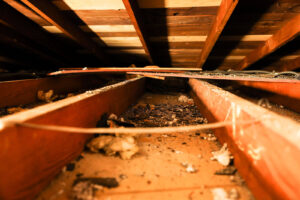
- Droppings in attic insulation or near vents
- Chewed wires or wooden beams
- Strong ammonia-like odors
- Grease marks along walls or beams
- Shredded insulation used for nesting
Scratching sounds together with droppings or gnaw marks warrant inspection. Old signs may remain after earlier activity, so these observations alone do not establish the size or current status of an infestation.
Mouse Sounds in the Attic Identification
People reporting possible mouse activity may describe the following sounds, but none identifies mice on its own:
- Light, fast scratching
- Soft squeaking or chirping
- Small, quick movements in walls or ceilings
Record whether the sound is brief, repeated or continuous and where it seems to originate. Those details help describe the concern; they do not establish the species or the exact location of an animal.
Scratching in Ceiling at Night Meaning: Why Timing Matters
Rats and mice may be active after dark, but nighttime noise is not a diagnosis. A lack of daytime noise does not prove that rodents are present or absent.
This nighttime behavior is a survival strategy. It allows rodents to:
- Avoid predators
- Explore food sources safely
- Build nests without interruption
Repeated nighttime movement is useful information for the inspector. Timing alone does not confirm rodent activity or determine the appropriate service.
Attic Rodent Infestation Signs You Should Not Ignore
Early detection is key. Common attic rodent infestation signs include ongoing scratching, droppings, and damaged insulation. However, the infestation often progresses in stages:
There is no fixed sequence that every rodent problem follows. Record changes in noise and any visible signs, and discuss persistent concerns with the office rather than waiting for a particular stage.
Once you reach this stage, professional intervention is usually required.
Signs of Rats in House at Night Beyond the Attic
Many homeowners first notice signs of rats in house at night before realizing the attic is the source. These signs include:
- Kitchen noises after dark
- Scratching inside walls near bedrooms
- Movement above ceilings
- Pet agitation or staring at walls
These behaviors often indicate rodents are moving through your home structure, not just confined to one area.
Rodents in Attic Prevention: Stopping the Problem Early
Effective rodents in attic prevention focuses on blocking access and eliminating attractants.
Common prevention methods include:
- Sealing roof gaps, vents, and soffits
- Trimming tree branches near the roof
- Removing outdoor food sources
- Keeping attic spaces clean and dry
- Regular home inspections
Reducing accessible food, shelter and entry opportunities can be useful, but the work and cost depend on the conditions at each home.
How to Get Rid of Rats in the Attic Safely
Many homeowners search for how to get rid of rats in attic once the problem becomes obvious. While traps and store-bought solutions may help temporarily, they rarely solve the root issue.
The most effective approach includes:
- Locating entry points
- Removing existing rodents safely
- Sanitizing contaminated areas
- Sealing the structure to prevent return
Untreated openings can allow further entry. Trapping and exclusion recommendations depend on the inspection findings and approved scope; neither guarantees that rodents will never return.
Scratching Sounds in Roof at Night: A Warning Sign
Scratching sounds near the roof warrant investigation, especially when accompanied by visible droppings or gnaw marks. Noise alone does not prove nesting, damaged wiring or structural damage. Ask the inspector which accessible evidence supports any recommended trapping, exclusion or cleanup.
Ask whether accessible evidence indicates damage and which work, if any, is recommended. Noise alone is not proof of an electrical hazard or a need for repairs.
When to Call a Professional Rodent Control Service
If scratching noises continue or increase, it is time to seek professional help. Rodents reproduce quickly, and DIY methods rarely address the full infestation.
A professional inspection can determine:
- Entry points
- Type of rodent (rats vs mice)
- Level of infestation
- Required exclusion and cleanup steps
Conclusion
Hearing scratching noises in attic at night is never something to ignore. Whether it is rats in attic sounds at night or mice in attic scratching ceiling, these noises are often early warnings of a growing infestation. Understanding what causes scratching in attic, recognizing attic rodent infestation signs, and acting quickly can save you from serious property damage and health risks.
If noises in the walls or ceiling persist, an inspection can help assess accessible evidence and the next steps. Describe what you have observed without assuming that every sound is a rat or mouse.
For expert inspection, rodent proofing, and long-term prevention services, contact Rodent Control Inc. today. We provide chemical-free rat and mouse control for detached single-family homes. A free inspection requires the homeowner to be present. Trapping and sealing recommendations depend on accessible conditions and approved scope; any warranty follows the signed invoice.