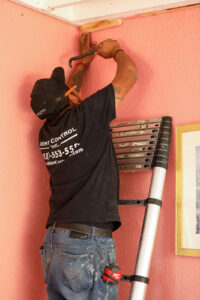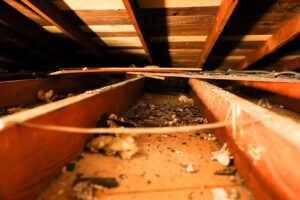
If you found droppings, chewed insulation, or gnaw marks in your attic, rodents have likely been living there, not just passing through. The right next step is a full inspection before any cleanup. Rodent droppings and nesting material carry real health risks, and contaminated insulation usually cannot be cleaned in place. It has to come out.
Start by Confirming What You Are Dealing With
Rats and mice leave different evidence, and the difference changes how the entry points get sealed.
| Rats | Mice | |
|---|---|---|
| Droppings | Roughly the size of a grain of rice or larger, often clustered | Smaller and more scattered across a wider area |
| Gnaw marks | Larger, deeper, often on wood and wiring | Finer, usually on cardboard, paper, and soft material |
| Entry gaps | Wider openings, roughly a half dollar and up | Gaps as small as a dime |
Other evidence worth noting before anyone goes up there: insulation that looks flattened or tunneled into a nest shape, a persistent ammonia smell from concentrated urine, and scratching overhead at night. We break those down further in the real dangers of rodents in your attic and what scratching noises at night usually mean.
Why You Should Not Clean It Up Yourself
Rodent droppings can carry hantavirus and other pathogens that become airborne when disturbed, which is exactly what happens when someone sweeps or vacuums a nest without the right protective equipment. Contaminated insulation also loses its effectiveness once it is compacted or soaked in urine, so cleaning around it instead of removing it leaves the problem in place.
This is the single most common mistake homeowners make after finding damage. The instinct is to clear it out immediately. The safer order is inspect, seal, then remove.
What Has to Come Out and What Can Stay
Not every attic needs a full insulation replacement. The deciding factor is how widespread the contamination is, not how bad the worst patch looks.
- Targeted removal can be enough when soiling is confined to one or two runways and the rest of the batt or blown-in material is dry and intact.
- Full replacement makes more sense when nesting has spread across the attic, when urine has soaked through to the drywall, or when the insulation has been compacted enough to lose its R-value.
An inspection is what tells you which one you are looking at. We cover the decision in more detail in why insulation replacement follows rodent removal, and the work itself is our insulation removal and replacement service.
What a Professional Attic Cleanup Actually Involves
A real cleanup starts with confirming the entry points are sealed, since removing a nest without closing off access just means round two a few months later. From there, contaminated insulation is removed, the space is sanitized and deodorized to clear lingering odor and bacteria, and new insulation goes in once the attic is confirmed clean.
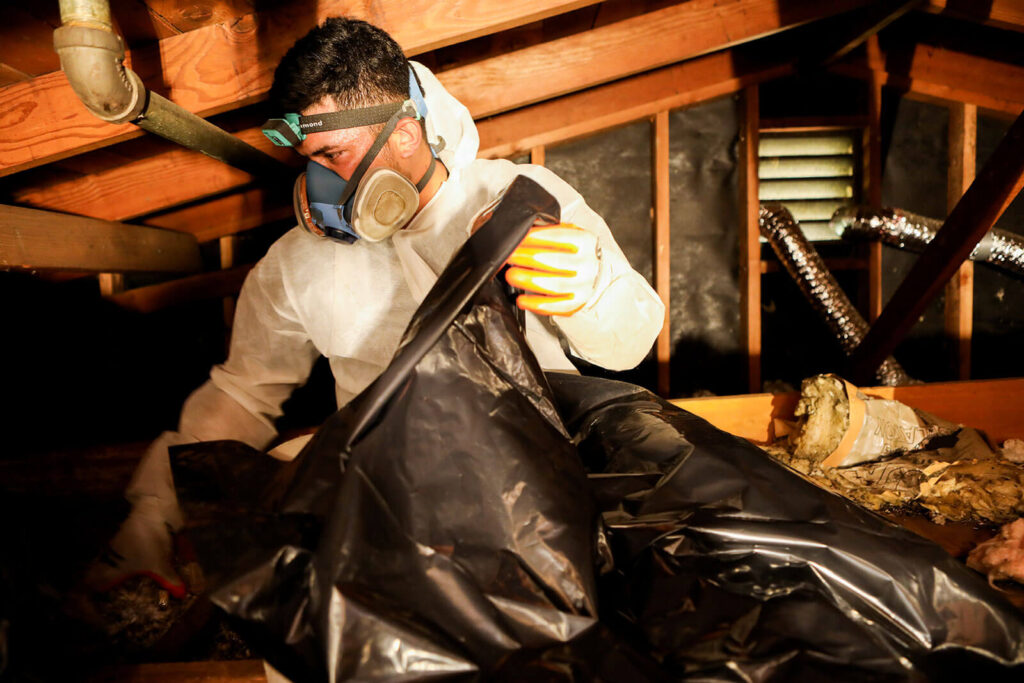
Skipping the exclusion step is the most common reason a cleaned attic has rodents back within weeks. That sequencing is the core of our attic cleaning work, and there is a fuller walkthrough in our guide to attic cleaning for rodent prevention.
Finding Where They Got In
Damage inside the attic is the symptom. The entry point is the cause, and it is usually somewhere unglamorous: a gap at the eave line, an unscreened vent, a roofline junction, or a utility penetration. Sealing those is rodent proofing, and it is what makes the cleanup hold.
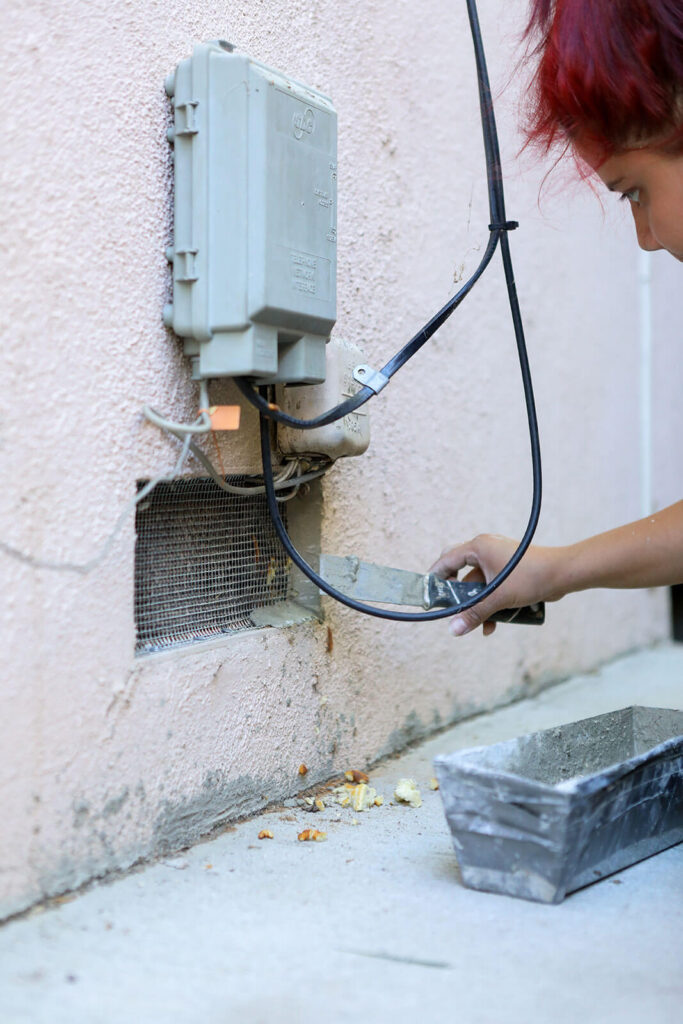
If the rodents are still active up there, deal with removal first. Our step by step guide to getting rats out of an attic covers that stage.
Why Attic Damage Shows Up on Your Energy Bill
Rodents do not just nest in insulation. They tunnel through it to build runways, which destroys its ability to regulate temperature. A heavily damaged attic often means higher energy bills long before anyone notices the rodent problem itself. Patching around damaged sections does not restore the R-value you are paying to maintain, which is why removal and replacement are frequently part of the same visit as the cleanup.
Serving LA County, Orange County, and the Bay Area
Rodent Control Inc handles inspection, exclusion, attic cleanup, and insulation replacement across all three regions.
Or call the main line at 1-833-376-3368, or request an inspection online. Rodent Control Inc is CA licensed, license number 8817, and family owned and operated since 1999.
Frequently Asked Questions
How do I know if it is rats or mice in my attic?
Rat droppings are larger, roughly the size of a grain of rice or bigger, while mouse droppings are smaller and more scattered. Rats also tend to leave larger gnaw marks and wider entry gaps, since they need more room to fit through.
Is it safe to go into my attic if I suspect rodents?
Avoid disturbing anything until it has been inspected. Sweeping or vacuuming dry droppings can release airborne particles. If you need to check, wear a mask and gloves and avoid stirring up dust.
Do I need to replace all the insulation or just the damaged sections?
It depends on how widespread the contamination is. A full inspection can usually tell you whether targeted removal is enough or whether a full replacement makes more sense long term.
How long does an attic cleanup take?
Most cleanups, including exclusion and insulation work, are completed in a single visit, though larger attics or heavier infestations can take longer.
Will homeowners insurance cover rodent damage in an attic?
Most policies treat rodent damage as a maintenance issue rather than a covered peril, so it is often excluded. It is worth checking your specific policy, since coverage sometimes applies when rodent activity causes a separate covered event such as an electrical fire.