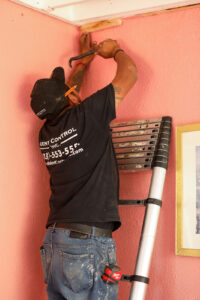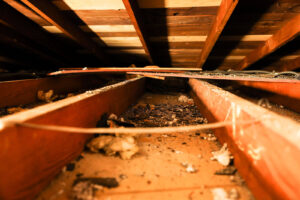

Address rat activity in an attic by assessing accessible areas, discussing chemical-free trapping and proofing, monitoring activity and following cleanup precautions. The sequence and timing depend on the findings at the home. Proofing addresses identified accessible openings; no permanent result or discovery of every opening is promised.
Sounds above a ceiling can warrant inspection, but do not confirm rats, an active nest or the extent of damage. Trapping and accessible entry-point work should be coordinated according to the findings at the home; no universal sequence or permanent outcome is promised.
This guide explains how to identify rat activity, assess accessible entry points, trap rats and reduce re-entry risk. Roof rats occur in the regions RCI serves, but an inspection is needed to assess the activity at your home. See our guide to scratching noises in the attic at night.
What Kind of Rats Are in California Attics?
California has two primary rat species, and knowing which one you have changes your approach:
- Roof rats (Rattus rattus) can use elevated spaces such as attics, rafters and utility routes. Their slender bodies, ears and tail proportions are among the features an inspector may consider. Location alone does not identify the species or establish how common it is at a particular home.
- Norway rats (Rattus norvegicus) are bulkier and tend to burrow near foundations, under decks, and in lower areas. An attic location alone does not establish the species; assess the available signs together during inspection.
This matters because roof rats travel along specific paths — utility lines, fences, and tree branches — to reach your roof. Understanding that behavior changes how you seal entry points and place traps. (If you’re still unsure whether it’s rats or mice, here’s how to tell mice and rats apart.)
Step 1: Document Signs for a Rat or Mouse Inspection
Record signs without assuming that any one observation confirms rats, mice or current activity. Examples to discuss during inspection include:
- Scratching or running sounds at night (rats are nocturnal, most active between dusk and dawn)
- Droppings in accessible areas; document the location without touching or disturbing waste
- Gnaw marks on wood beams, insulation, or electrical wiring
- Nests made from shredded insulation, paper, or fabric
- Grease marks along rafters and beams where rats travel repeatedly
- A strong ammonia smell from accumulated urine
Sound volume and time of day do not establish the animal involved. RCI services rats and mice only and does not provide squirrel or other wildlife control. For observations to discuss at inspection, see the signs of a rodent infestation many homeowners miss.
Step 2: Find How They Got In (Entry-Point Inspection)
Trapping addresses activity while proofing addresses identified entry points. Unresolved or new openings can allow later activity, but signs alone do not establish the cause or timing of a return. Areas an inspector may assess include:
- Gaps where the roofline meets the eaves (fascia boards, soffits)
- Unsealed holes around plumbing pipes and electrical conduit
- Damaged or missing vent covers (gable vents, roof vents, crawlspace vents)
- Gaps around HVAC lines
- Openings where utility cables (cable TV, internet) enter the building
- Spaces between the chimney and surrounding structure
- Accessible openings whose size, surrounding structure and signs warrant assessment during inspection
Inspection access: Limit homeowner observations to areas you can reach safely. Do not climb onto a roof or enter an attic solely to look for rodents. Ask which accessible openings were identified and which areas could not be inspected.
Step 3: Coordinate Trapping and Accessible Entry-Point Repairs
Trapping and exclusion should be coordinated according to observed activity, accessible areas, and the approved scope. Closing an active opening without considering rats already inside can complicate removal. A professional inspection can help determine the appropriate sequence of work.
Suitable materials depend on the location, ventilation needs, and building condition. Common exclusion materials include:
- Hardware cloth (1/4-inch galvanized mesh) for larger gaps and vent openings
- Copper mesh for pipe penetrations (steel wool works temporarily but rusts)
- Expandable foam plus hardware cloth for irregular gaps
- Sheet-metal flashing for roofline gaps
- Commercial-grade vent covers rated for rodent exclusion
Do not use spray foam alone — rats can chew through it. Professional rodent exclusion focuses on identifying and sealing accessible entry points included in the approved work.
Step 4: Trap the Rats
Ask the technician how trapping and identified entry-point repairs will be coordinated for the activity and accessible conditions at your home. The following distinctions explain which methods are within RCI’s service scope:
Snap Traps (Recommended)
Snap traps can be part of chemical-free rat removal. They can injure people or pets, so placement, access control and regular checks matter. Follow the trap manufacturer’s instructions and ask your technician about precautions for your household. RCI recommends trapping and proofing based on the findings at an eligible detached, single-family home.
Live Traps
RCI does not provide wildlife relocation. Discuss proposed chemical-free trapping, handling and household precautions with the technician rather than assuming a live-capture or release service is included.
Rodenticide (Poison Baits)
Rodenticide baiting is an industry method, not an RCI service. RCI uses chemical-free rat and mouse trapping and proofing. Ask any provider which methods and products are proposed and what precautions apply; this article does not provide rodenticide-use instructions.
Step 5: Remove Rats and Monitor
Ask who will check the proposed traps, what handling precautions apply and which follow-up visits are included. Report new signs and catches to the technician. A period with no catches, or the appearance of droppings alone, does not establish that all rodents are gone or identify an unsealed opening. Approved work and any included follow-up follow the signed invoice.
Step 6: Clean and Sanitize the Attic
Cleanup recommendations depend on the conditions documented during inspection. Do not sweep or vacuum rodent droppings, urine or nesting materials before following the recommended disinfection steps. Follow the CDC instructions for cleaning up after rodents; extensive contamination may require professional cleanup. Recommended attic cleanup, insulation removal or replacement is discussed in the verbal estimate on site. Approved work and warranty terms follow the signed invoice; an itemized written quote is not promised.
Discuss rodent-related contamination and damaged insulation during the inspection. Any cleanup or insulation work depends on the findings and approved scope.
Step 7: Prevent Rats From Returning
Maintenance and food or shelter management can complement approved trapping and entry-point work. Discuss exterior conditions relevant to indoor rat or mouse activity; RCI does not service outside-only rodents. Examples of maintenance considerations include:
- Discuss branches or vegetation providing roof access with a qualified maintenance provider; do not climb to inspect or trim them
- Manage fallen fruit and accessible food sources around the home
- Eliminate dense ground cover (ivy, thick shrubs) against the foundation
- Secure garbage cans and compost bins
- Remove bird feeders or switch to rodent-proof versions
- Discuss storage and shelter conditions near the structure during the inspection
Report safely visible damage or new openings to the inspector. Repairs must suit the structure and preserve ventilation and drainage. No saving or return on investment is guaranteed; see rodent proofing scope and cost considerations.
When to Call a Professional
Ask about an inspection if you notice indoor rat or mouse activity or have concerns about safely accessible conditions. Situations to discuss include:
- You can’t safely access your attic or roofline
- You can’t find the entry points after a thorough inspection
- Trapping hasn’t produced results after two weeks
- The infestation is large (heavy droppings throughout, multiple active nests)
- You need attic insulation remediation and replacement
- The problem has recurred more than once
Rodent Control Inc. provides chemical-free rat removal, rodent exclusion and proofing and related attic cleanup for detached single-family homes in eligible Los Angeles County, Orange County and Bay Area locations. The homeowner must be present for the free homeowner inspection. We provide a verbal estimate on site; trapping, entry-point repairs, cleanup and insulation work are separate scope items unless approved together. Any warranty follows the signed invoice. We do not service businesses, apartments, condos, mobile homes, outside-only rodents or San Francisco city. Saturday is closed.
Frequently Asked Questions
How long does it take to get rid of rats in the attic?
Timing depends on the activity observed, access, trapping results and approved work. Ask which visits and monitoring are proposed. No fixed completion date, confirmation that every rat is gone or permanent protection is promised.
Can I get rid of attic rats myself?
Suitability depends on access, conditions and household precautions. Do not climb or enter unsafe areas to inspect or trap. A professional inspection can assess accessible signs and proposed work without promising to find every opening or explaining every recurrence.
What do rats in the attic sound like?
Scratching, scurrying or gnawing sounds may warrant inspection. Sound, volume and time of day alone do not confirm a species, an active nest or concealed damage. Record the location and timing for the inspector; RCI services rats and mice only.
How much does attic rat removal cost?
The price depends on the findings and approved scope. The homeowner must be present for the free inspection and verbal estimate on site. Trapping, entry-point sealing, cleanup and insulation are separate scope items unless approved together; any warranty follows the signed invoice. See our guide to rodent control costs in Los Angeles.
Are attic rats dangerous?
Rat activity can damage wiring and contaminate materials. A rodent inspection does not diagnose illness or establish the safety of concealed wiring. Discuss health concerns with a qualified health professional and electrical concerns with a qualified electrician. See the real dangers of rodents in attics.
Do rats in the attic go away on their own?
Do not assume that silence or fewer sightings means activity has ended. Record changing signs and discuss them during an inspection. The conditions at the home determine proposed trapping, proofing and follow-up; neither population size nor a fixed timeline can be established from symptoms alone.